Broadband Industry Trends For 2026 | Corning

From Interconnecting Data Centers to Consolidation and Convergence, Find Out What’s Ahead for the Broadband Industry

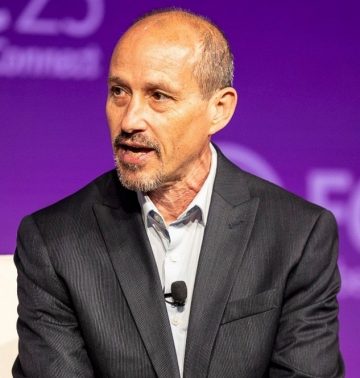
Bob Whitman

The broadband industry has undergone rapid transformation in recent years and continues to evolve as both consumer connectivity expectations and AI-driven applications reshape network demands. As we move into 2026, I expect this evolution to reach new heights, with operators seeking alternative ways to support unprecedented traffic growth.

Here are three key trends I’ll be watching closely as the industry prepares for another year of accelerated change.

1. Carriers play a crucial role in data center interconnects

From AI inference and training to edge computing and automation, data-intensive applications are placing new pressure on data centers and the networks that interconnect them. Hyperscalers have experienced exponential growth over the last few years, accounting for 44% of the worldwide capacity of all data centers, according to Synergy Research Group. And the industry expects more than 100 new hyperscale data centers to be built annually to keep up. Because of this expansion, carriers will increasingly play a central role in building and operating critical interconnects.
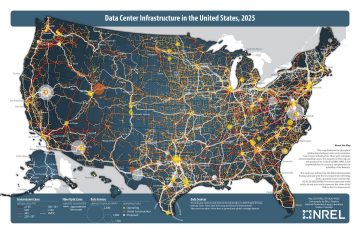
Real-world demands are also pushing fiber capacity towards the practical and physical limit of installed infrastructure. Investments in long-haul optical fiber are accelerating, driven by a variety of service needs across the industry.

In core networks, traffic volumes are climbing steadily. This growth is fueled by the increasing number of consumer users coming online, as well as the expansion of service providers who are both constructing and leasing backhaul services to meet connectivity requirements.

Similarly, in the area of data center interconnects (DCI), exponential increases in AI-related traffic are pushing fiber counts to new levels. The number of fibers in a typical DCI cable has already doubled over the past four years, and the trend towards smaller, denser cables will continue as operators look to fit more capacity into existing ducts. Solutions like Corning® SMF-28® Contour fiber, which is designed with a smaller outside diameter, allow carriers to add more fibers without the need for larger pathways.

As DCI becomes even more central to the rapid build-out of data centers, I anticipate carriers will ramp up partnerships with hyperscalers, cloud providers and large enterprises to deliver tailored solutions.

2. Convergence and consolidation pick up speed

There are two other trends that are intertwining – business consolidation, mostly driven by macroeconomic factors, and convergence – meaning the increasing use of the same communications infrastructure for both broadband and wireless connectivity.

These two trends, which had been developing separately, are starting to merge. In the year ahead, corporate merger and acquisition activity will continue to increase across the telecom landscape, driven by the need to stay competitive, streamline operations and deliver more unified user experiences. As part of this, integrating wired and wireless networks will allow carriers to provide seamless connectivity, whether users are at home or on the move. Service bundling will expand as well, combining broadband and mobile offerings under a single umbrella to simplify end user customer use and encourage loyalty.

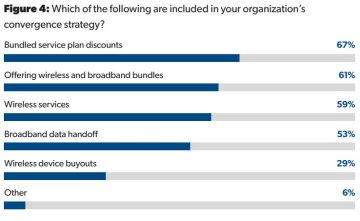
A recent survey by Lightwave and ISE revealed 44% of companies are already implementing convergence strategies, while another 22% have plans to move towards convergence. The survey found companies using similar strategies to attract new customers and retain existing ones. Roughly 67% of respondents said they are offering discounts by bundling service plans.

Lightwave ISE Survey
SOURCE: Lightwave and ISE Survey

There’s an infrastructure story here as well. In an effort to capture more customer opportunities, we’re seeing carriers overbuilding fiber networks, where multiple fiber network operators are passing the same homes. As the industry and companies consolidate, these overbuilds are creating more consumer choice which will likely continue driving prices downward. As the market consolidates, the carriers that thrive will be the ones that invest in agile infrastructure that’s capable of supporting personalized, adaptable service packages.

Bob Whitman

Bob Whitman is Vice President of Market and Product Strategy for Carrier Networks at Corning Optical Communications and is on the Board of Directors for the Fiber Broadband Association. At Corning, he is responsible for Carrier Networks Market and Business Development to include strategy and execution of Corning’s Fiber to the Home, Inside Plant, 5G and Emerging Applications initiatives. With over 25 years’ experience in optical fiber network architecture, product development and carrier engagement, Bob has developed commercial and technical expertise in all aspects of optical communications.

Interested in learning more?

Contact us today to learn how our end-to-end fiber optic solutions can meet your needs.

Thank you for your submission!

A Corning representative will be contacting you shortly about your inquiry. Should you need immediate assistance please call our customer service line at +49 30 5303 2100.